Chit Karan Singh

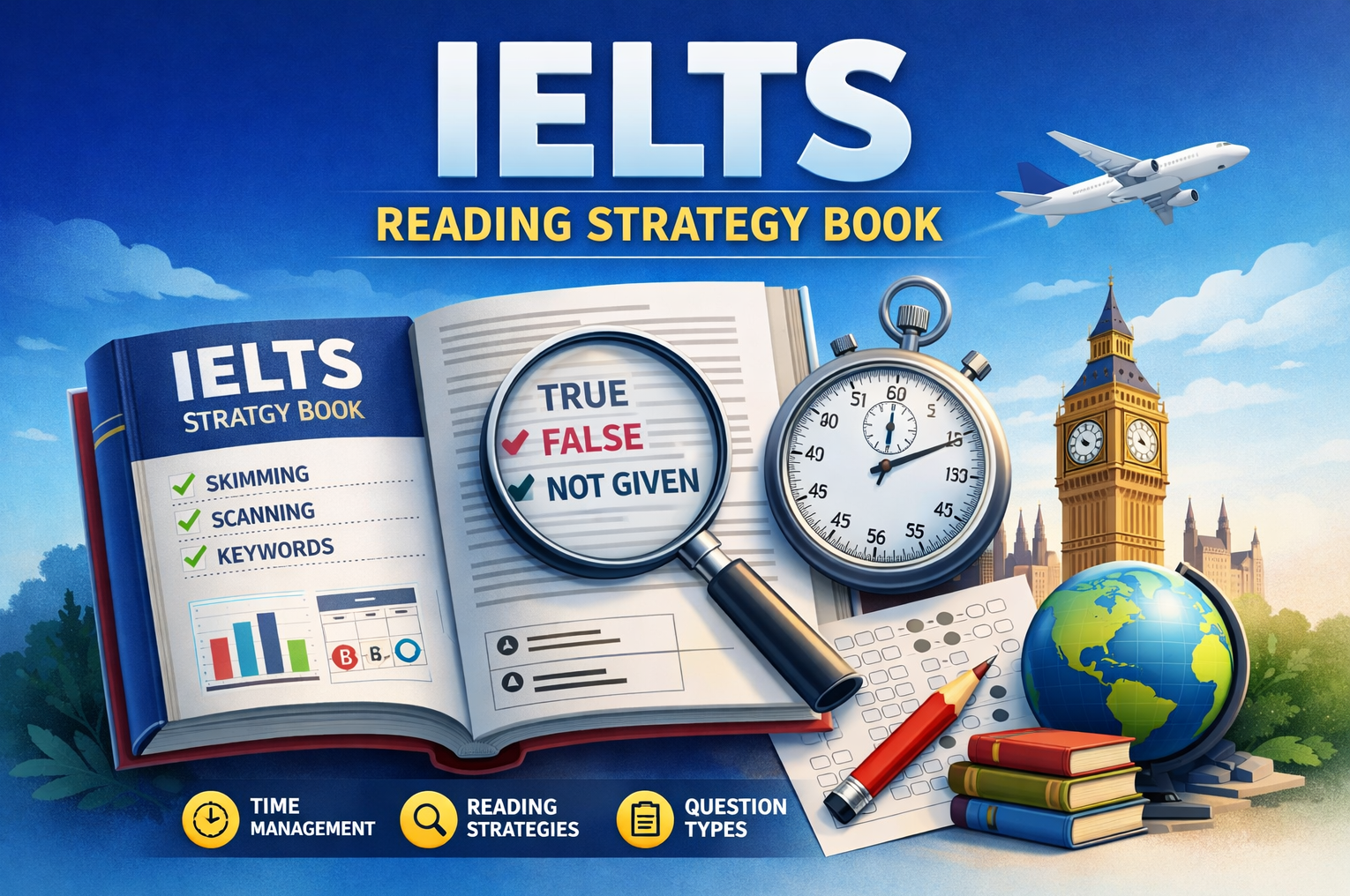
IELTS Reading Strategy Book

Improving reading speed, accuracy, and test performance through strategic IELTS exam preparation.
IELTS Reading Strategy Book chit karan singh chitkaran

Overview

Designed and developed a comprehensive IELTS Reading strategy book focused on helping students master test-taking techniques, improve reading efficiency, and achieve higher band scores. This resource simplifies complex question types into structured, repeatable strategies for real exam success.

Key Results

The Problem:

Why Students Struggle in IELTS Reading?

Many IELTS candidates struggle with the Reading module not because of a lack of ability, but due to ineffective strategies and poor exam awareness.

Many IELTS candidates struggle with the Reading module not because of a lack of ability, but due to ineffective strategies and poor exam awareness. As an IELTS trainer, I consistently observe that even capable test-takers underperform simply because they approach the section without a clear plan. The Reading test is designed to assess not just comprehension, but speed, accuracy, and strategy under strict time pressure.

These issues often cause candidates to lose valuable time, miss key information, and leave questions unanswered.

With the right guidance and proven techniques, these challenges can be transformed into strengths—helping you approach the IELTS Reading module with confidence, precision, and a clear strategy to achieve your target band score.

The Solution:

Strategy driven IELTS Reading Guide

Approach

Instructional Design + Practical Strategies

This project was developed using Learning Experience Design (LXD) principles to ensure practical application and learner engagement.

The book transforms reading from a passive activity into an active, strategy-based process.

The IELTS Test is not just a comprehension, it’s a test of speed, accuracy, and strategy.

Key Features of the IELTS Reading Book

Comprehensive Question Type Coverage

Fill in the Blanks
True / False / Not Given
Matching Information
Multiple Choice Questions
Sentence Completion

Core Reading Techniques

Skimming for main ideas
Scanning for specific information
Identifying keywords and synonyms

Time Management Framework

Prioritizing easier questions first
Handling “in-order” vs “not-in-order” questions
Reducing time spent on difficult sections

Impact and Outcomes